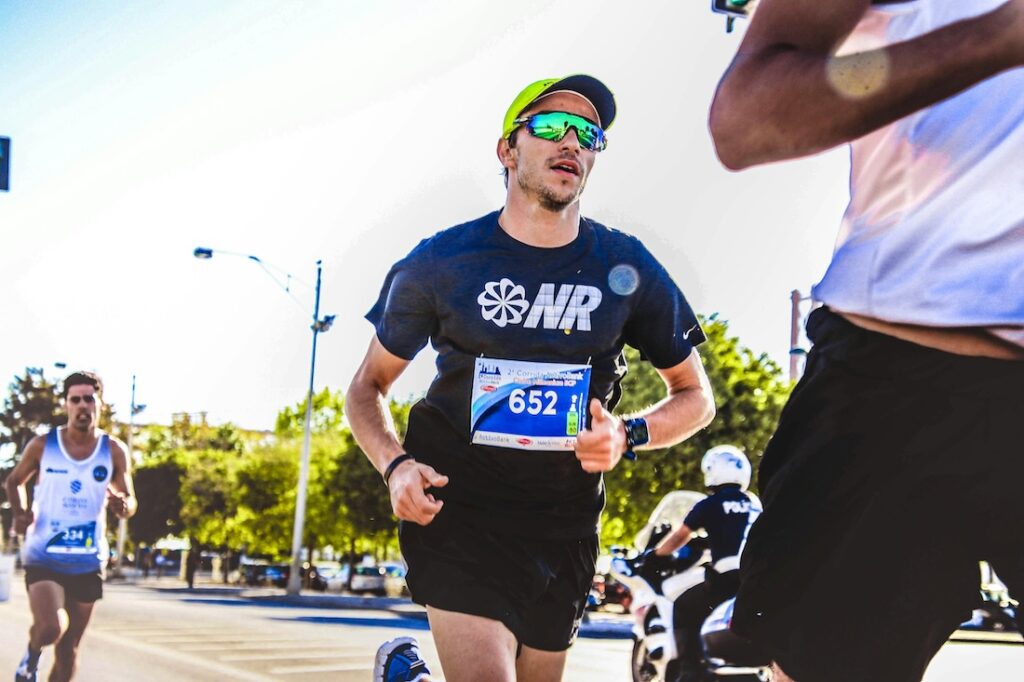
Trail runners are tough, strong and persevering athletes. Yet they spend most of their training alone. Trail running nurtures performance, but also fosters solitude. To progress without becoming isolated, you need to vary your physical and mental stimuli.
Cross-training therefore appears to be an essential lever. But what if the solution lay in an unexpected team sport that was as explosive as it was friendly? Padel, with its combination of complete muscular workout and human contact, could well become the ally of the modern runner.
Padel, explosive cross-training for trail running
Padel develops the qualities that the traileur needs: explosiveness, balance and coordination. On the court, each rally requires acceleration, changes of direction and intense support work. This type of effort improves proprioception, which is essential on unstable ground. What's more, the movements also involve the upper limbs, which improves posture and balance on the downhill run.
Like trail running, padel requires consistency and concentration. But here, the fun is immediate. The action is so rhythmic and social that you forget you're tired. And that's not all, the padel level system allows everyone to work with the right partners. This makes the experience accessible and motivating, even for beginners.
On a physical level, padel also offers ideal active recovery. Lateral movements and ball-striking encourage joint mobility, while improving responsiveness. Trail runners will find a balance between intensity and flexibility, without overloading the joints already stressed by mountain running.
The psychological barrier of team sport
For a runner accustomed to the silence of the trails, joining a team sport may seem like a daunting prospect. intimidating. The fear of not being up to the job or of getting in the way of a group that has already been formed often puts the brakes on taking action. The gaze of others becomes an invisible obstacle.
But padel is something special. It caters for all profiles. Clubs cultivate a relaxed atmospheree, far from the rigid competition. The contrast with the solitude of trail running is strong, but positive. On the run, the energy of the group carries as much as the individual effort.
The level system, the community access code
Padel is organised around a system of levels to facilitate progression. Players are classified according to a scale from P100 to P2000. The higher the number, the more advanced the level. This universal benchmark enables everyone to find their bearings and find suitable partners.
You can register with a club or simply do a self-assessment. Specialised applications help you to meet players of the same leveleven when on the move. This structure eliminates the risk of imbalance during matches.
Games become smoother, more enjoyable and less stressful. This system also creates a real community. We measure ourselves, we progress, we meet again. Motivation is reborn, supported by the friendliness and clarity of the rankings.
From trail to padel, testimonial and transition
Many runners have already taken the plunge. Their first sessions reveal a sport that's more technical than it looks, but that's not all. infinitely gratifying. It's a different kind of effort. Shorter, more nervous, but just as demanding.
Post-match exchanges extend the experience and turn a simple training session into a social occasion. On the court, then over a drink, bonds are forged naturally.
Padel connects two worlds. That of solitary performance and that of shared conviviality. For the traileur, it's a complete investment, both physical and human. By joining a court, they discover a different kind of training and a friendly community. It's up to you to find your level, put on your trainers and get involved.